
Portfolio Management & Execution
Optimise your portfolios with automated analysis, rebalancing and efficient order management
Portfolio management software is a system that enables institutional investors to analyse their portfolios, align them with target structures and execute the resulting orders in full compliance with the applicable rules. XENTIS Portfolio Management & Execution from Profidata combines portfolio analysis, rebalancing, pre-trade compliance and order workflows with matching and settlement on a single, shared database.
Where portfolio managers, traders and compliance officers would otherwise juggle separate systems and manual reconciliations, XENTIS creates a seamless end-to-end process – from initial analysis to settled transaction. Profidata, founded in Switzerland in 1985, currently supports more than 50,000 funds and mandates with a combined volume of over €4.5 trillion.
Expert review: Stefan Siegrist, Head of Business Analysis and Pre-Sales at Profidata · Last updated: 20 October 2026
Portfolio Management Software
Your benefits
XENTIS combines in-depth portfolio analysis, dynamic rebalancing and optimised order workflows to implement your investment strategies. With real-time data processing, pre- and post-trade checks and integrated trading connectivity, you and your clients remain in control at all times. Discover portfolio management software that automates your workflows – for better performance and regulatory compliance.

Analysis & comparison
Precise portfolio analysis using IBOR, look-through and real-time data to make informed decisions

Rebalancing & quick order
Rebalancing software with order proposals, pre-trade checks and direct order entry

Performance attribution
Performance contribution and detailed evaluation with flexible calculation methods for strategy analysis

Order capturing & pooling
Efficient order capture with pooling, automated order allocation and liquidity management

Order workflow & monitoring
End-to-end order monitoring with real-time tracking, full status visibility and automated matching & settlement

Execution management
Automated order routing via email, SWIFT or FIX, including integration with trading platforms such as Bloomberg EMSX, TSOX and FXGO
Analysis & comparison
Precise portfolio analysis using IBOR, look-through and real-time data to make informed decisions
Rebalancing & quick order
Rebalancing software with order proposals, pre-trade checks and direct order entry
Performance attribution
Performance contribution and detailed evaluation with flexible calculation methods for strategy analysis
Order capturing & pooling
Efficient order capture with pooling, automated order allocation and liquidity management
Order workflow & monitoring
End-to-end order monitoring with real-time tracking, full status visibility and automated matching & settlement
Execution management
Automated order routing via email, SWIFT or FIX, including integration with trading platforms such as Bloomberg EMSX, TSOX and FXGO
Portfolio Management & Execution
Deeper insight, better decisions
For your business
Portfolio management software for institutional investors
What is portfolio management software – and how does it differ from OMS and EMS? Portfolio management software supports investment decisions: it shows how a portfolio is structured, how it has performed and where it deviates from its target allocation. An Order Management System (OMS) handles the next step: capturing, checking, pooling and monitoring orders. An Execution Management System (EMS) connects the trading desk to trading venues and counterparties.
In many institutions, these three tasks are spread across separate systems, often from different providers. Every handover between them represents an interface, and every interface is a potential source of error: holdings must be reconciled, orders transferred and check results consolidated. XENTIS Portfolio Management & Execution combines the functions of a PMS and an OMS and takes orders all the way through to matching and settlement – on the same platform and using the same database.
Arrange a consultationSystem
Core function
Private Cloud or On-Premises
What XENTIS delivers

Optimise your portfolios with automated analysis, rebalancing and efficient order management
Analysis and comparison: Real-time portfolio analysis with IBOR and look-through, as well as performance attribution and contribution, for well-informed decisions
Rebalancing and Quick Order: Dynamic order entry with rebalancing, pre-trade checks and optimised trading strategies for maximum efficiency
Order Management and Execution: Efficient order capture with optimised workflows, end-to-end market monitoring, and precise matching and settlement
Investment processes in XENTIS
From analysis to settlement
In XENTIS, an investment decision passes through every key internal process step on a single integrated platform – without manual hand-offs between portfolio management, order management and investment compliance.
1. Analysis: The portfolio manager analyses holdings, valuations and key metrics, both current and historical – for individual portfolios, carve-outs or consolidated views, across all common asset classes and with look-through. Cash flow projections support liquidity planning by analysing future account movements by value date.
2. Target vs actual comparison: Strategic and tactical asset allocation targets, together with their tolerance bands, are monitored continuously.
3. Rebalancing or quick order: Deviations are corrected via automatically generated order proposals, or the portfolio manager enters an order directly (in units, nominal or percentage terms, either as an order quantity or as a target value). Alternatively, orders can be imported using predefined Excel templates.
4. Pre-trade compliance: Before it is released, every order is automatically checked against the rules defined in the compliance module.
5. Order workflow: Checked orders are captured, pooled where necessary and monitored in the order dashboard; the order blotter shows open, executed and cancelled orders.
6. Execution: Orders are transmitted automatically to market participants via SWIFT, FIX or email; trading platforms such as Bloomberg EMSX, TSOX and FXGO can be integrated.
7. Matching and settlement: Executed trades are automatically matched, allocated and passed on for further processing in the XENTIS middle and back office.
Because every step draws on the same database, everyone sees the same picture – the portfolio manager as well as compliance, trading and the back office.
The next step
Every successful investment strategy starts with the right tools. Our experts would be happy to offer you a no-obligation consultation.
Arrange a consultation
Always included
The foundation for all XENTIS solutions

Our investment management software provides a solid foundation: a consistent, fully auditable data basis for your investment processes
Data management, reconciliation and integration for centrally managing and automatically processing external market data, internal holdings and regulatory reports
All financial instruments such as equities, bonds, derivatives and structured products are covered – for your liquid and illiquid investments
Alternative investments can be recorded, valued and reported in a structured manner – complemented by flexible NAV calculations and commitment tracking
XENTIS Portfolio Management
From reliable data to informed decisions
An integrated platform or a fragmented system landscape?
Whether an integrated platform pays off is decided at the hand-offs between process steps. In a fragmented landscape, separate systems from different providers handle portfolio management, order management, compliance and accounting. In XENTIS, these steps all access a shared database.
A fragmented landscape can make sense if a financial institution deliberately combines individual specialised systems and takes responsibility for the integration itself. However, the greater the number of mandates and the stricter the requirements for control and traceability, the greater the advantages of a shared database.
Fragmented system landscape
Integrated XENTIS platform
Case study
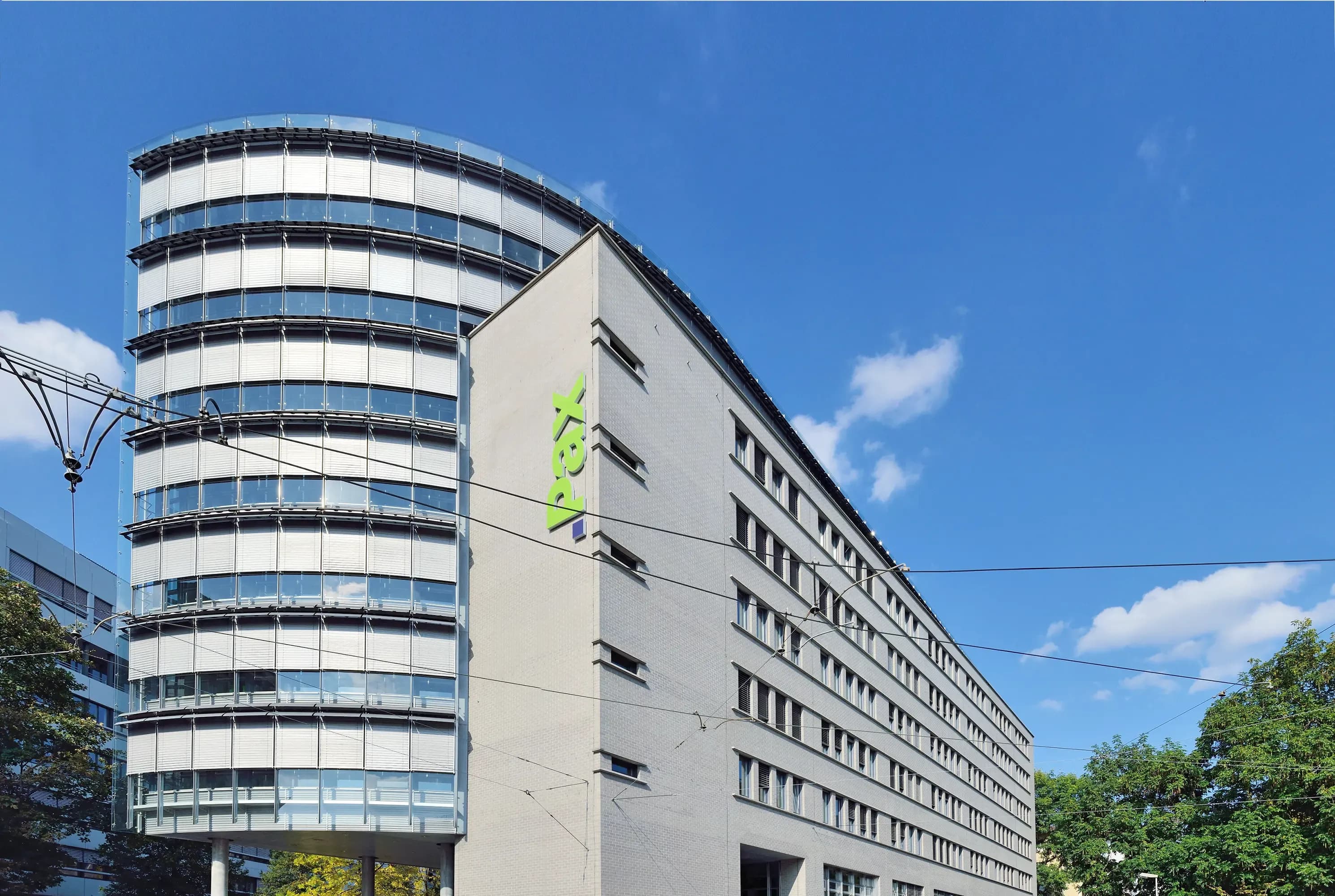
Integrated portfolio management at Pax Asset Management
Basel-based Pax Asset Management AG (Pax AM) has selected XENTIS as its central front-to-back platform for portfolio management, investment controlling for its insurance business and fund administration. The aim was a fully automated system landscape that meets the highest regulatory standards and reduces operational risk.
Following a software evaluation conducted between October 2020 and August 2021, Pax AM chose XENTIS, operated by Profidata in its private cloud (Xcloud). The decision was announced in March 2022. The evaluation focused in particular on portfolio management, reporting and regulatory reporting, accounting under Swiss GAAP FER and the Swiss Code of Obligations reconciled with the SAP general ledger, and the integration of the existing custodian banks and of Bloomberg as the primary market data provider.
With the integrated solution, Pax AM set out to raise the quality of its investment processes, reduce technical complexity and increase the level of automation. At the time of the announcement, Pax AM managed around CHF 9 billion in assets.
“The introduction of XENTIS as an end-to-end front-to-back solution not only fulfils the explicit objectives of automation in portfolio management, pre-trade control, electronic trading and execution, and performance monitoring, but also the implicit objectives of Pax AM: improving quality, reducing (technical) complexity while increasing the level of automation, and avoiding operational risks.”
– Christian Zurfluh, then Managing Director of Pax Asset Management AG
Who XENTIS Portfolio Management & Execution is designed for
XENTIS Portfolio Management & Execution is designed for institutional financial service providers with complex investment processes, including asset managers, investment management companies, fund management companies, banks, insurers and pension funds. It offers the greatest benefit to institutions that manage many funds and mandates in parallel and want to run portfolio management, compliance and settlement from a single source.
The solution can be operated either in the private cloud or on-premises. Access rights can be configured at a granular level, down to individual functions and data objects, and every change is recorded completely and auditably. Thanks to its modular design, institutions can start with selected modules and extend the scope of functionality later.
“In portfolio management, quality is rarely determined by a single function, but by whether everyone involved is working with the same figures. When portfolio managers, compliance and the back office all draw on the same up-to-date holdings, time-consuming reconciliation between departments simply falls away. And that is precisely the strength of XENTIS: an investment decision becomes a checked, executed and cleanly settled transaction – without detours.”
– Stefan Siegrist, Head of Business Analysis and Pre-Sales at Profidata
What matters when choosing portfolio management software
The right portfolio management software is the one that fits your own processes, mandates and regulatory obligations. These nine questions will help you evaluate the options, regardless of vendor:
1. Data basis: Does the front office work with continuously updated holdings data, or are daily reconciliations with the back office required?
2. Asset classes: Are all relevant instruments covered, including derivatives, funds with look-through and alternative investments?
3. Rebalancing: Can model portfolios and benchmarks serve as target structures, and does rebalancing work across many mandates at once?
4. Compliance: Is the pre-trade check embedded in the order workflow, and does the rulebook cover your jurisdictions?
5. Trading integration: Which connections to brokers and trading platforms are supported, e.g. FIX, SWIFT or Bloomberg EMSX?
6. Configurability: Can business users adapt data fields, reports and workflows themselves, without relying on the vendor?
7. Traceability: Are all changes logged in a fully auditable way, and can access rights be managed at a granular level?
8. Operation and implementation: Which operating models are available, and which reference projects demonstrate a realistic implementation timeframe?
9. Excel integration: Can analyses be exported to Excel via an API, and can orders be imported using predefined Excel templates?
Would you like to find out more about XENTIS?
We’ll show you how our solutions can support your investment management processes. Our experts will be happy to advise you personally and without obligation.
Arrange a consultationIn-depth knowledge


